




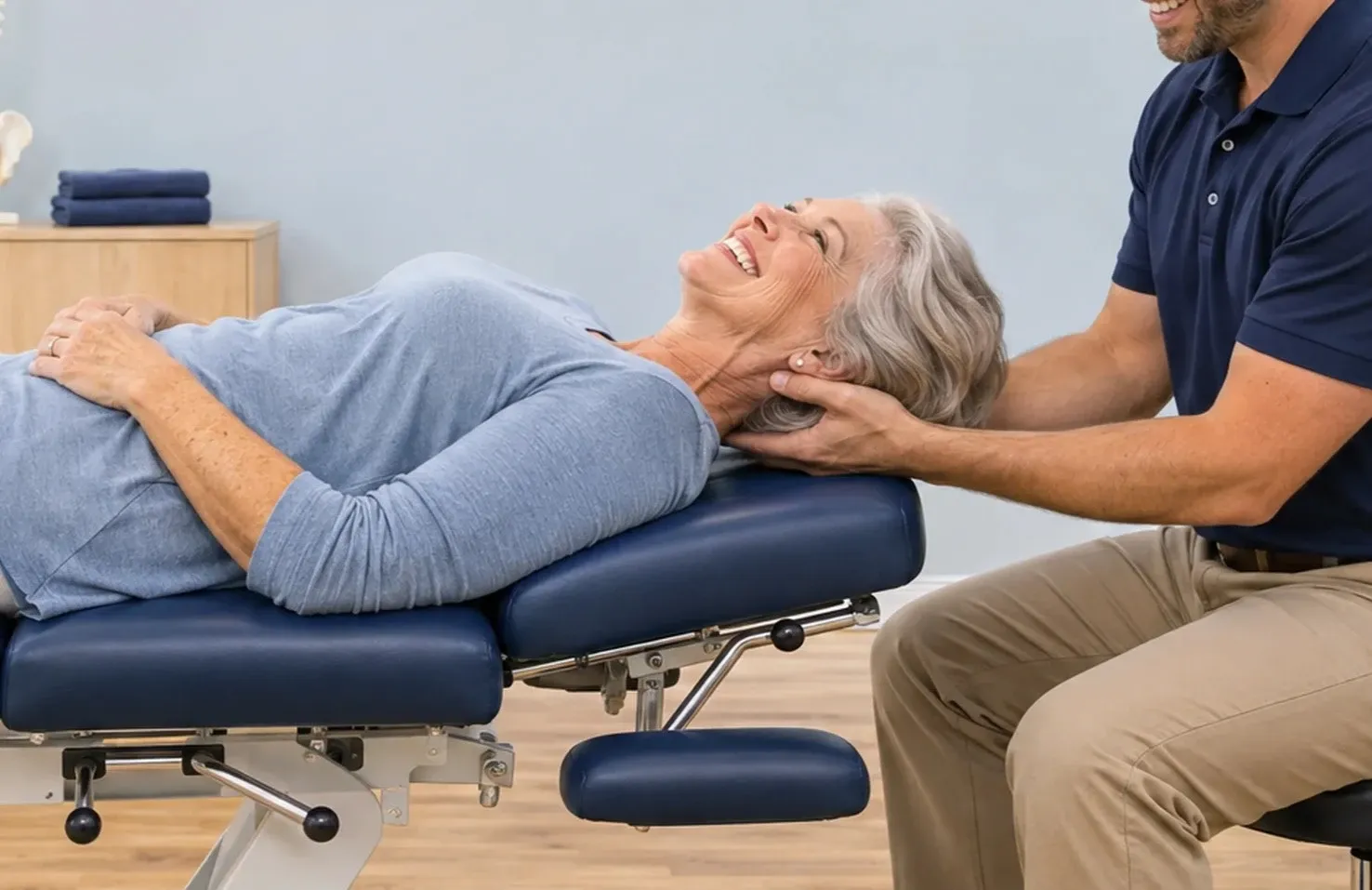

What Is Vertigo?
Vertigo is the feeling that you or the room is spinning, tilting or swaying when nothing is moving. It is a symptom, not a diagnosis, and it can come from the inner ear, the brain, the heart, medications or the neck. Because the causes are so different, the right care depends on finding where the dizziness comes from first.
Recognizing the Signs
At Discover Chiropractic in Trussville, AL, our chiropractors focus on one part of that picture: cervicogenic dizziness, a type of unsteadiness linked to problems in the joints and muscles of the neck. Our vertigo treatment starts with a careful exam that also screens for causes that need a medical referral, so you are pointed in the right direction from the first visit.

Why Vertigo and Dizziness Happen
Understanding the Root Causes
Your sense of balance depends on three systems working together: the inner ear, your eyes and position sensors in your muscles and joints. The upper neck is packed with these sensors. They tell your brain where your head sits in relation to your body, and the brain blends that signal with what the inner ear and eyes report.
When the neck is stiff, injured or held in a forward head posture for hours, those sensors may send signals that no longer match the inner ear. Researchers call the result cervicogenic dizziness. It usually feels like unsteadiness or lightheadedness rather than a violent spin, and it often rises and falls with neck pain, stiffness or long days at a screen.
Many other causes have nothing to do with the neck. Benign paroxysmal positional vertigo (BPPV), vestibular neuritis, Meniere disease and vestibular migraine start in the inner ear or nervous system. Medications, dehydration, low blood pressure, heart rhythm problems and neurological conditions can also cause dizziness. the Vestibular Disorders Association offers a clear overview of these inner ear disorders.
What Contributes to Neck-Related Dizziness?
Identifying Your Triggers
Several everyday factors can stiffen the neck and confuse your balance signals, and they often work together over weeks or months.
-
Forward Head Posture
Hours at a desk or on a phone push the head forward and load the upper neck muscles that feed balance signals to the brain.
-
Neck Injury or Whiplash
A car accident, fall or sports collision can strain neck joints and muscles, and dizziness may show up days or weeks later.
-
Neck Arthritis and Stiffness
Age-related changes in the neck joints can limit motion and alter the position sense your brain relies on for balance.
-
Muscle Tension and Stress
Tight muscles at the base of the skull, often from stress or an awkward sleep position, are linked with neck-related unsteadiness.
-
Headaches and Migraine
People with migraine or tension headaches are more likely to notice dizziness, and tight upper neck muscles are common in both.
-
Inner Ear Problems
Loose crystals in the inner ear (BPPV) are a common cause of spinning vertigo, so we screen for them and refer when needed.
When a Medical Doctor Should Come First
How Our Exam Sorts Out the Cause
Your first visit begins with listening. Our team asks when the dizziness started, what it feels like, how long it lasts, what sets it off and whether neck pain, headaches or a recent injury came with it. We then check neck motion, posture, muscle tension and simple balance findings. When the neck looks like the main source, gentle chiropractic adjustments for vertigo and posture advice may help.
Because vertigo has many causes, our team screens for signs that point away from the neck. Spinning when you roll over in bed, hearing loss, ringing in one ear, fainting, a racing heartbeat or a new medication usually call for an evaluation by your primary care doctor, an ear, nose and throat doctor or neurologist. When we see those signs, we tell you and help you find the next step.
Call 911 right away if dizziness comes with a sudden severe headache, double vision, slurred speech, weakness or numbness on one side, facial droop, trouble walking, chest pain, fainting or sudden hearing loss. These can be signs of a stroke or a heart problem, and minutes matter. Chiropractic care is never the first stop for these symptoms.
Why Choose Discover Chiropractic
Since 1999 we have cared for Trussville neighbors who feel dizzy or off balance. Our two chiropractors take time to listen and screen carefully, since dizziness can have more than one cause.
-
Careful Screening
We check for causes that need a medical referral first and tell you plainly when another provider is the better fit, since not every dizzy spell starts in the neck.
-
Gentle Techniques
Our chiropractors use Diversified Technique, the Activator Method and Thompson Drop-Table, chosen for your comfort so you can feel steady during each visit.
-
Care for Every Age
From teens with sports injuries to grandparents with stiff necks, we shape care around your age and health history, and we move at a pace that feels safe.
-
Clear Plans
No care begins until you understand our findings and agree with the plan, and we adjust it as your symptoms change, keeping you informed at every visit.
Comparing Gentle Adjustment Approaches
Our chiropractors choose the adjustment style that fits your neck, your comfort level and your health history.
| Treatment | Approach | Best For | How It Feels | Research |
|---|---|---|---|---|
| Chiropractic Adjustments | Diversified (hands-on) | Stiff, restricted neck joints | Gentle pressure, possible pop | Limited, mixed |
| Chiropractic Adjustments | Activator (instrument) | Low-force preference | Light, quick tap | Limited, mixed |
| Chiropractic Adjustments | Thompson Drop-Table | Gentle, table-assisted motion | Soft drop of the table | Limited, mixed |

Signs It May Be Time to Book a Visit
Recognizing When to Seek Help
These signs suggest your dizziness may be linked to your neck and worth a careful chiropractic exam, once a medical doctor has ruled out other causes when needed.
- Dizzy With Neck Pain
- Off Balance After Turning
- Dizziness After an Injury
- Other Causes Checked
Related Services
Learn about the gentle chiropractic care behind our approach to dizziness, then explore all the services we offer.
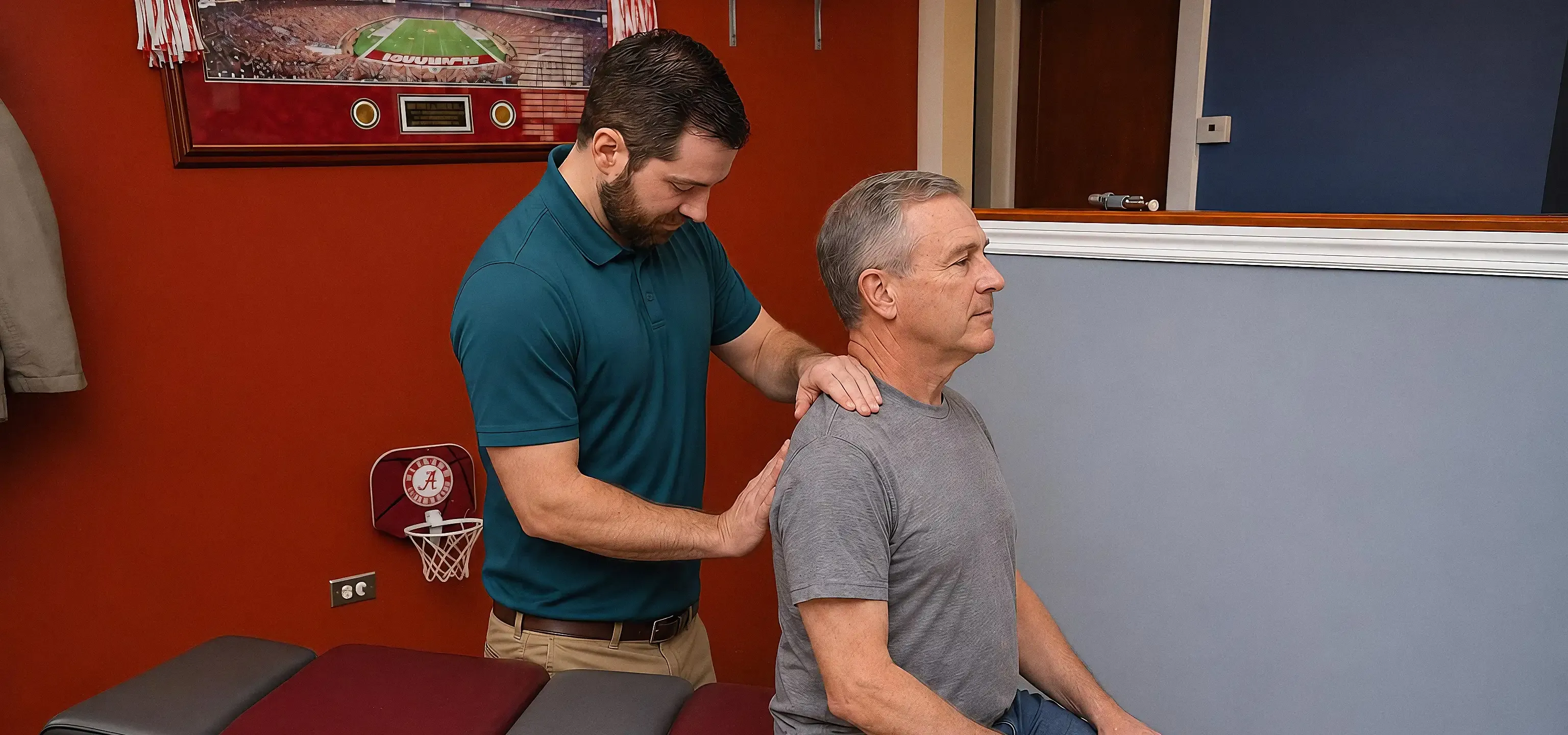
Frequently Asked Questions About Vertigo and Dizziness
Dizziness can feel scary. Here we answer how to tell if it comes from your neck, what care involves, how many visits to expect and when dizziness is an emergency.
Can a chiropractor for vertigo help with my dizziness?
A chiropractor for vertigo may help when the dizziness is linked to neck joint and muscle problems, called cervicogenic dizziness. Research reviews suggest manual therapy can help some people with this type, though the studies are small and results are mixed. It is not the right care for inner ear, heart or neurological causes, so our team screens for those first.
What does vertigo treatment at your Trussville office involve?
Vertigo treatment at our office starts with a history and an exam of your neck, posture and balance. If your dizziness appears neck-related, care may include gentle adjustments plus simple posture and movement advice for home. Our team reviews how you feel at each visit and changes the plan when needed. Individual results vary.
How do I know if my dizziness is coming from my neck?
Neck-related dizziness usually feels like unsteadiness rather than a strong spin, and it tends to track with neck pain or stiffness. It often follows an injury or long hours of poor posture. No single test confirms it, so it is identified by ruling out other causes and finding neck problems that match your symptoms.
When is dizziness an emergency?
Call 911 if dizziness comes on suddenly with a severe headache, double vision, slurred speech, weakness or numbness, facial droop, trouble walking, chest pain or fainting. These can signal a stroke or a heart problem. Sudden hearing loss with dizziness also needs urgent medical care, not a chiropractic visit.
How many visits will I need?
There is no set number. Some people notice steadier days within a few visits, while others need several weeks, especially when posture or an old injury is involved. We set a plan after your exam, check progress at each visit and tell you if you are not improving as expected so you can see another provider.
What should I bring to my first visit?
Bring a list of your medications, any recent test results or notes from your doctor, and a record of when your dizziness happens and what sets it off. Our office has on-site digital x-rays and uses them only when your history and exam call for them. To check your benefits, call our office at (205) 661-6600.
Where can I find vertigo treatment near me in Trussville, AL?
Discover Chiropractic is at 6381 S Chalkville Road in Trussville, AL 35173, a short drive from Clay, Pinson and Center Point. To request your first visit, complete our New Patient Forms online or call (205) 661-6600. Our team will screen your dizziness and tell you if a medical doctor should see you first.
Scientific References
- Lystad et al., Chiropr Man Therap. (2011). Manual therapy with and without vestibular rehabilitation for cervicogenic dizziness: a systematic review. PMID: 21923933.
- De et al., J Man Manip Ther. (2022). Systematic review and meta-analysis of the therapeutic management of patients with cervicogenic dizziness. PMID: 35383538.
- Reiley et al., Arch Physiother. (2017). How to diagnose cervicogenic dizziness. PMID: 29340206.
- Sung, Medicina (Kaunas). (2022). Suboccipital Muscles, Forward Head Posture, and Cervicogenic Dizziness. PMID: 36556992.
- Bhattacharyya et al., Otolaryngol Head Neck Surg. (2017). Clinical Practice Guideline: Benign Paroxysmal Positional Vertigo (Update). PMID: 28248609.
- Hours
- Mon–Fri 7:00 AM–5:30 PM
Sat 8:00 AM–12:00 PM (2nd & 4th Saturdays only) - Phone
- (205) 661-6600