





What Is a Herniated or Bulging Disc?
Herniated disc treatment starts with understanding the disc itself. Between each pair of vertebrae sits a disc with a tough outer ring and a soft, gel-like center. A bulging disc spreads outward evenly beyond its normal edge, while a herniated disc has a tear in the outer ring that lets some of the inner material push out and press on nearby nerves.
When a disc in your lower back is involved, you may feel a deep ache, stiffness when you stand up, or pain, tingling or numbness that travels into the buttock and leg. A disc in the neck can send similar sensations into the shoulder, arm or hand. Some bulging discs cause no symptoms at all and only show up on imaging.
Recognizing the Signs
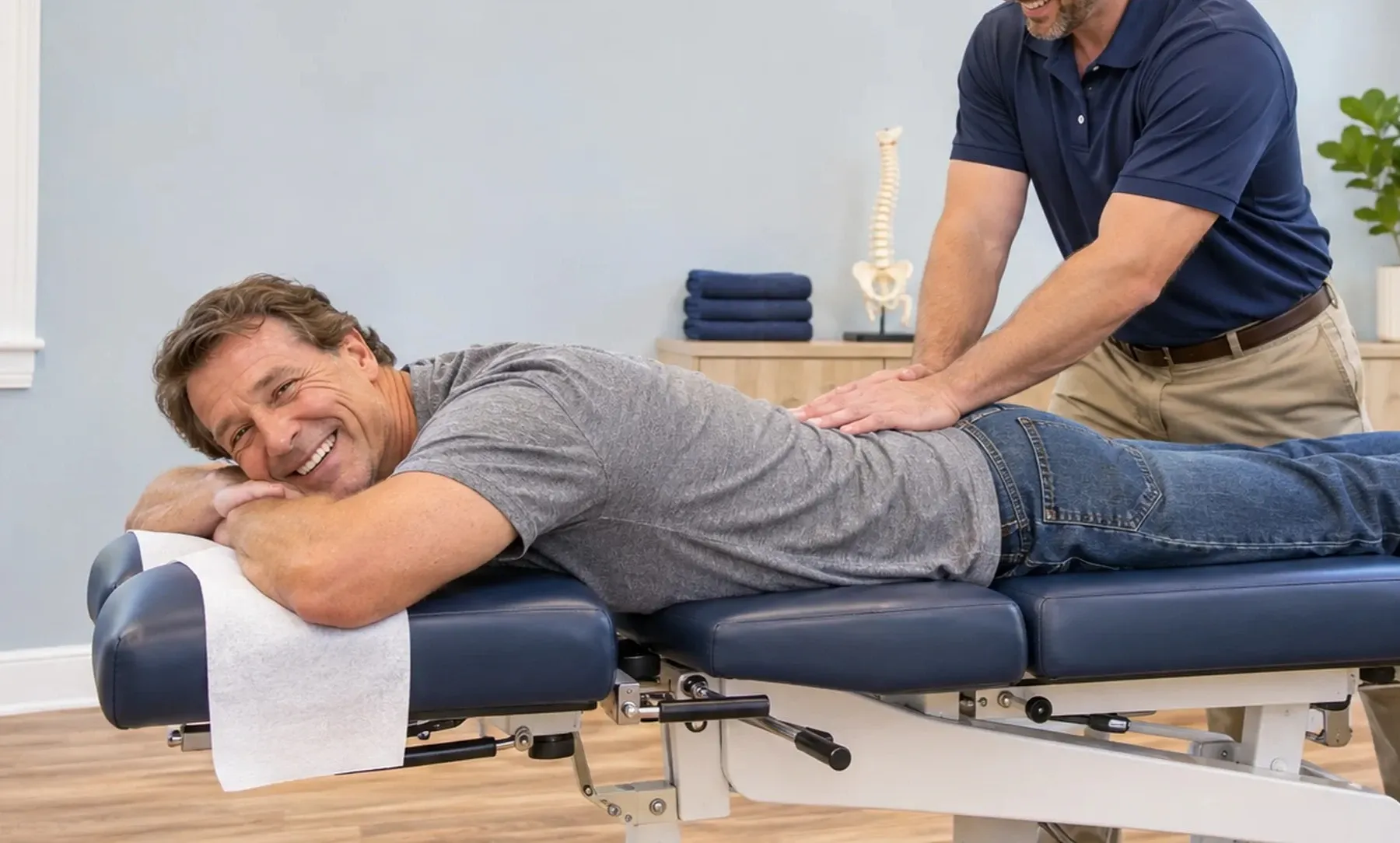
At Discover Chiropractic in Trussville, AL, our chiropractors offer conservative care for herniated and bulging discs. Your plan may include non-surgical spinal decompression for herniated discs and gentle chiropractic adjustments for herniated discs, along with home guidance. We also tell you plainly when a medical doctor is the better next step.

Why Discs Herniate or Bulge
Understanding the Root Causes
Discs change with age. Starting in early adulthood, the gel-like center slowly loses water and the outer ring becomes less flexible, a process often called disc degeneration. A drier, stiffer disc is more likely to bulge or tear under load, which is one reason disc problems are common between about ages 30 and 50.
A herniation can follow one clear moment, such as lifting something heavy while twisting, or it can build quietly from months of sitting, bending and repetitive strain. Once disc material shifts outward, it can crowd a nerve root and trigger inflammation, which explains why leg or arm symptoms are sometimes stronger than the back or neck pain itself.
Extra body weight, smoking, physically demanding work, long hours of driving and a family history of disc problems can all raise your risk. The herniated disk overview from Cleveland Clinic explains these risk factors in more detail, and our team can talk through which ones apply to your own daily routine at home and at work.
What Raises the Risk of a Herniated or Bulging Disc?
Identifying Your Triggers
Several everyday factors add stress to your discs. They often work together over years rather than all at once, which is why small changes in how you sit, lift and move can matter.
-
Age-Related Disc Changes
Discs lose water and flexibility with age, so the outer ring is more likely to bulge or tear under ordinary daily loads.
-
Lifting and Twisting
Lifting heavy objects with a rounded back, especially while twisting, puts sudden pressure on the lower lumbar discs.
-
Long Hours of Sitting
Desk work and long commutes load the lower back discs for hours, especially with slumped posture and few breaks.
-
Extra Body Weight
Added body weight increases the load on the lumbar discs with every step, bend and lift you make during the day.
-
Repetitive Strain
Jobs and hobbies with frequent bending, lifting or vibration, from warehouse shifts to yard work, add up over time.
-
Smoking
Smoking reduces blood flow and nutrients to the discs, which can speed up wear and slow their ability to recover.
Disc Evaluation and When to See a Doctor First
How We Check Your Disc Symptoms
Your first visit begins with a conversation about when your symptoms started, what makes them better or worse and how they affect work, sleep and family life. Our chiropractors then check posture, spinal motion, reflexes, muscle strength and sensation, and take digital x-rays when they are needed to look at alignment and rule out other problems.
X-rays show bones and alignment, not the discs themselves. If your exam points to significant nerve involvement, we may recommend an MRI through your medical doctor. A careful exam helps us decide whether conservative care is a good fit for you or whether another provider should see you first.
Some symptoms need medical care right away. Call 911 or go to the emergency room if you notice loss of bladder or bowel control, numbness in the groin or inner thighs, sudden or worsening weakness in a leg or foot, back pain with a fever, or pain after a fall, car crash or other major trauma. These signs can point to cauda equina syndrome or another serious problem.
Why Choose Discover Chiropractic
Since 1999, Trussville patients have come to us for disc pain. Our two chiropractors take time to examine you, explain your options and tell you when an MRI or a medical doctor makes more sense.
-
Time to Listen
We start with your story and a thorough exam, so your care fits your symptoms rather than a one-size routine, and you always know why each step is in your plan.
-
Two Gentle Options
Our chiropractors pair gentle adjustments with cervical or lumbar decompression when the exam supports it, so disc care can follow your symptoms in the neck or low back.
-
Honest Plans
You hear what research supports, what it does not, and when a medical doctor or MRI is the better next step, so you can make clear choices about your disc care.
-
Care for Every Age
From teens to grandparents, our office cares for families from Trussville, Pinson, Clay and Springville, and we shape disc care around your age and activity level.
Treatment Options Comparison
Compare the two non-surgical options our team uses for herniated and bulging discs. Many care plans combine both.
| Treatment | Best For | How It Feels | Typical Rhythm | Research |
|---|---|---|---|---|
| Spinal Decompression | Leg or arm nerve symptoms | Slow, gentle stretch on a table | A series of sessions | Mixed, may help some |
| Chiropractic Adjustments | Joint stiffness and back pain | Gentle hands-on or instrument care | Visits set at your exam | Encouraging, still limited |

Signs It May Be Time to Book a Disc Evaluation
Recognizing When to Seek Help
These signs suggest a disc may be involved and that a professional exam is worth scheduling. If any red flag above applies to you, see a medical doctor first.
- Pain Down One Leg
- Arm or Hand Symptoms
- Sitting Makes It Worse
- Stiff Mornings
- Symptoms Lasting Weeks
Related Services
Explore the non-surgical disc care our team may use, including decompression, then see every service we offer.
Frequently Asked Questions About Herniated and Bulging Discs
Disc pain can be worrying. Below we answer common questions about herniated versus bulging discs, decompression, how long care takes and whether adjustments are safe.
What is the difference between a herniated disc and a bulging disc?
A bulging disc spreads outward evenly while its outer ring stays intact. A herniated disc has a tear that lets inner material push out, which is more likely to irritate a nerve. Bulging disc treatment and herniated disc care often look similar at our office, and your plan depends on your exam rather than the label alone.
Do herniated discs get better without surgery?
Many do. Clinical guidelines and reviews report that a large share of people with a lumbar disc herniation improve over weeks to months with conservative care such as activity, exercise and manual therapy. Surgery is usually considered when symptoms are severe, keep getting worse or do not improve after a reasonable trial of care.
Is spinal decompression a good option for a herniated disc?
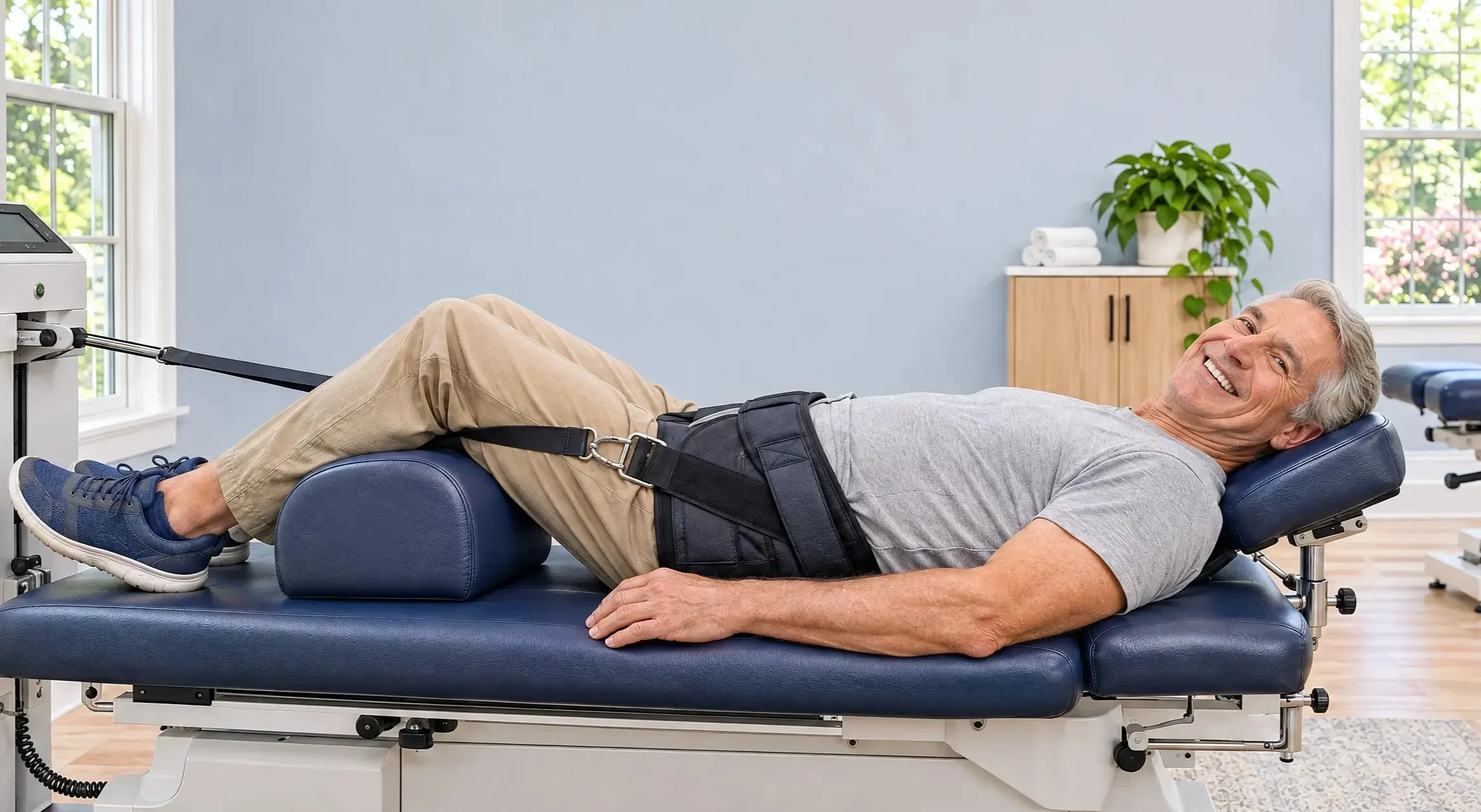
It can be for some adults. Decompression uses a motorized table to apply a slow, controlled stretch to the spine. Research on decompression and traction is mixed, so we use it as one part of a broader plan. It is not a fit with fractures, advanced osteoporosis, pregnancy, spinal tumors or recent spine surgery with hardware.
How long does herniated disc treatment take?
It varies from person to person. Some people notice changes within a few weeks, while others need a longer series of visits combined with home exercises. We recheck your progress regularly and adjust the plan or refer you if you are not improving as expected. Individual results vary.
Will an adjustment make my disc worse?
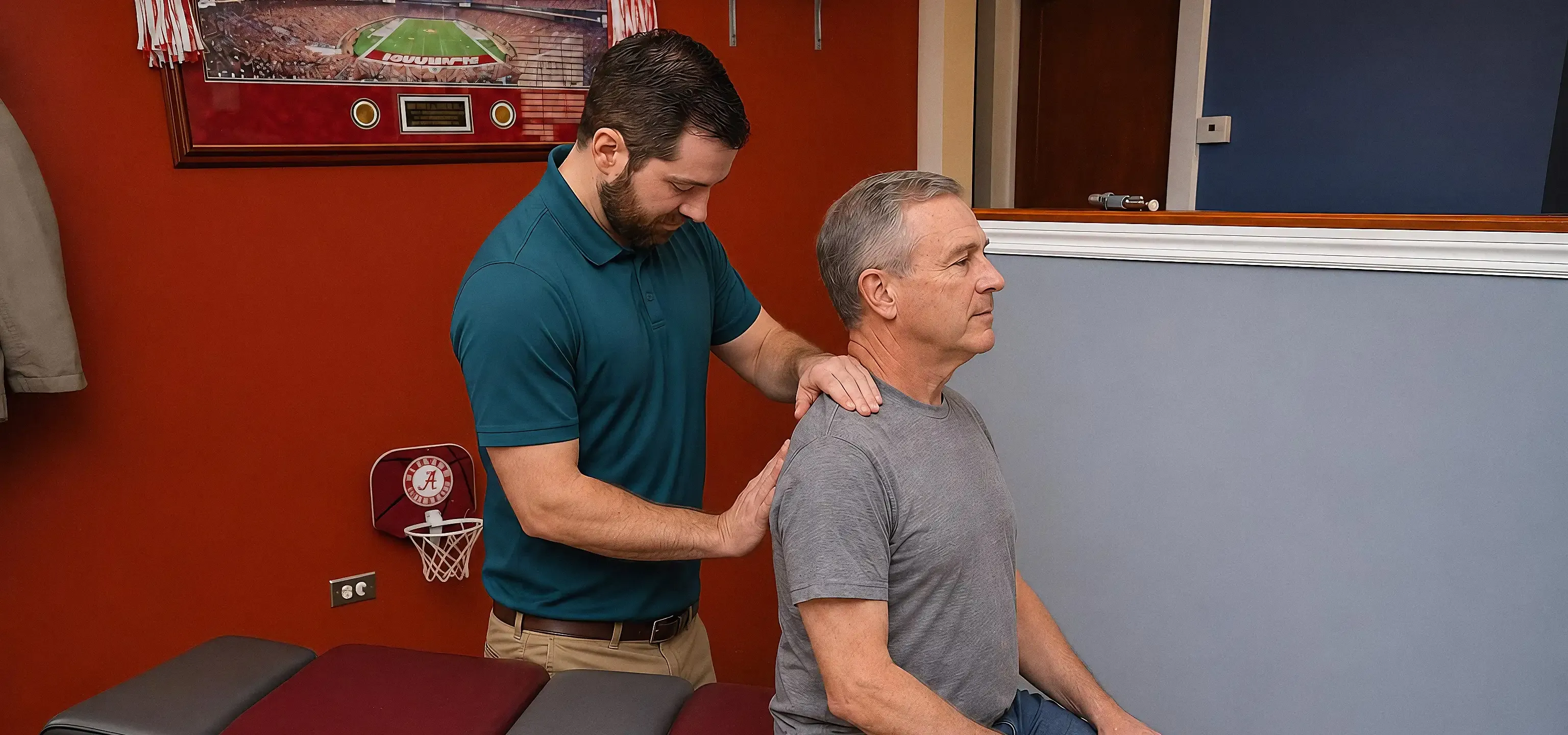
Our chiropractors choose gentle methods, such as the Activator Method or Thompson Drop-Table, when a disc is irritated, and avoid forceful twisting. Mild soreness for a day or two is the usual reaction when one occurs. Tell us right away if leg or arm symptoms change after a visit.
Where can I find herniated disc treatment near me in Trussville, AL?
Discover Chiropractic is at 6381 S Chalkville Road, Trussville, AL 35173, a short drive from Center Point, Pinson and Clay. Call (205) 661-6600 or complete our New Patient Forms to request your first visit, and our office will help you find a time.
Scientific References
- Kreiner et al., Spine J. (2014). An evidence-based clinical guideline for the diagnosis and treatment of lumbar disc herniation with radiculopathy. PMID: 24239490.
- Zhang et al., Am J Med. (2023). Lumbar Disc Herniation: Diagnosis and Management. PMID: 37072094.
- Leemann et al., J Manipulative Physiol Ther. (2014). Outcomes of acute and chronic patients with magnetic resonance imaging-confirmed symptomatic lumbar disc herniations receiving high-velocity, low-amplitude, spinal manipulative therapy: a prospective observational cohort study with one-year follow-up. PMID: 24636109.
- Wegner et al., Cochrane Database Syst Rev. (2013). Traction for low-back pain with or without sciatica. PMID: 23959683.
- Vanti et al., Phys Ther. (2021). Effectiveness of Mechanical Traction for Lumbar Radiculopathy: A Systematic Review and Meta-Analysis. PMID: 33382419.
- Hours
- Mon–Fri 7:00 AM–5:30 PM
Sat 8:00 AM–12:00 PM (2nd & 4th Saturdays only) - Phone
- (205) 661-6600