




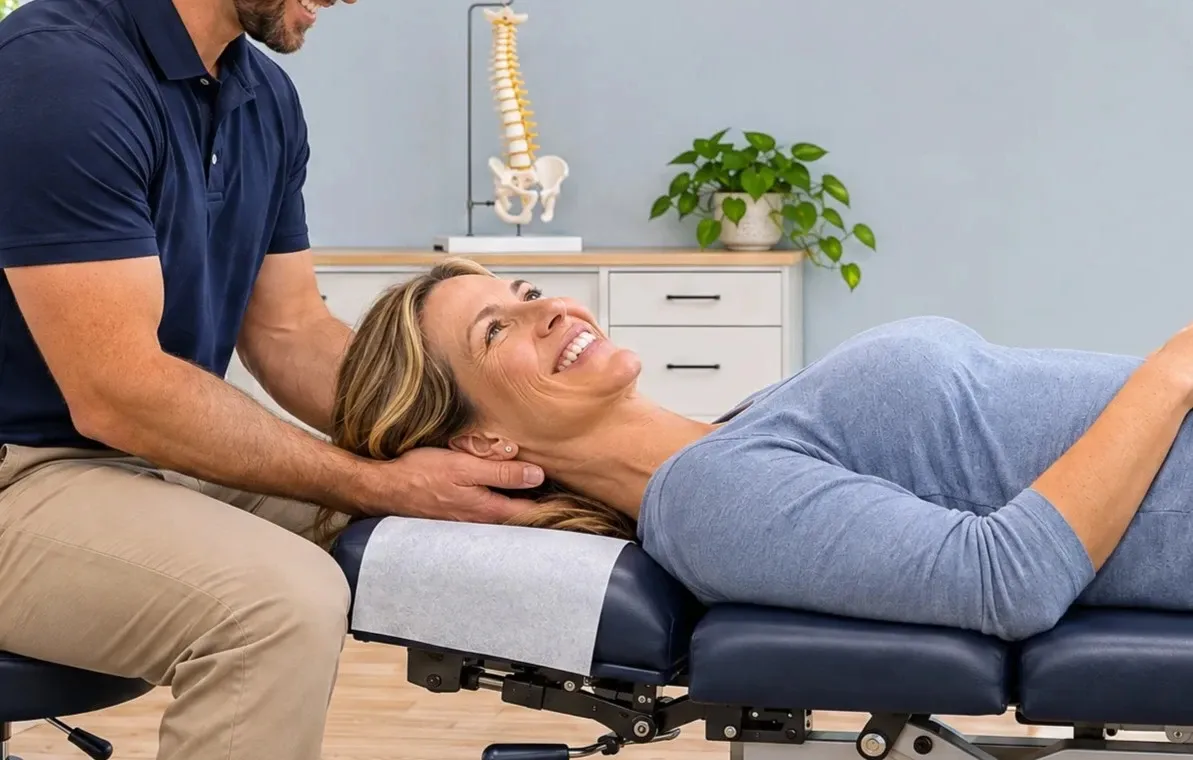

What Are Headaches & Migraines?
Headaches come in several types, and the right plan depends on which one you have. Tension headaches feel like a tight band or pressure around the head. Cervicogenic headaches start in the joints and muscles of the neck and spread to the head. A migraine is a neurological condition that often brings throbbing pain with nausea or sensitivity to light and sound.
When headaches keep you from work, school events or family time, you start planning your week around them. Many people look for migraine treatment or care for tension headaches after medication alone has not been enough, or when they want to understand what is driving their headaches in the first place.
Recognizing the Signs
At Discover Chiropractic in Trussville, AL, our chiropractors look for the neck and posture factors behind your headaches. Your plan may include gentle chiropractic adjustments for headaches & migraines and ultrasound and e-stim therapy for tight neck and shoulder muscles, always working alongside your medical care rather than in place of it.

Why Headaches and Migraines Happen
Understanding the Root Causes
Your neck and head share nerve pathways. The upper three joints of the neck send signals into the same pathway that carries sensation from the head, so stiffness or irritation in those joints and muscles can be felt as head pain. This shared wiring explains why cervicogenic headaches often start at the base of the skull and spread forward.
Tension headaches are linked to tight muscles in the neck, shoulders and scalp. Stress, poor sleep and long hours looking down at a phone or laptop can all add to that tension. Forward head posture increases the load on those muscles through a long workday, which is why headaches often build by late afternoon.
Migraine works differently. It involves changes in how the brain and nerves process signals, and attacks are often set off by triggers such as missed meals, poor sleep, hormone changes, bright light or stress. Resources from the American Migraine Foundation list common migraine triggers, and a simple headache diary can help you and your doctor spot patterns.
What Triggers Headaches and Migraines?
Identifying Your Triggers
Headaches rarely have a single cause. These common factors often overlap and can make headaches more frequent or more intense over time.
-
Forward Head Posture
Looking down at phones, tablets and laptops for hours strains the muscles and joints at the top of the neck.
-
Neck Joint Stiffness
Restricted motion in the upper neck joints can refer pain into the head, a hallmark of cervicogenic headache.
-
Stress and Muscle Tension
Stress tightens the shoulder, jaw and scalp muscles, a common pattern behind tension headaches.
-
Sleep Changes
Too little sleep, irregular bedtimes or an awkward pillow position can set off tension headaches and migraine.
-
Missed Meals
Skipping meals or not drinking enough water is a well-known trigger for migraine attacks in many people.
-
Hormone Shifts
Changes in estrogen around periods, pregnancy or menopause are linked to migraine in many women.
Headache Evaluation and When to Seek Emergency Care
How We Check Headache Patterns
Your visit begins with a detailed history: where the headache starts, how long it lasts, what it feels like, what seems to set it off and which medications you use. Our chiropractors then check neck motion, posture, muscle tension and the joints of the upper neck, along with basic nerve tests, to see whether your neck may be part of the picture.
If your history points to migraine, medication overuse or another medical cause, we will say so and encourage you to work with your primary care doctor or a neurologist. Chiropractic care can sit alongside that plan, but it should never replace a medical evaluation for new, changing or severe headaches.
Call 911 or go to the emergency room for a sudden, severe thunderclap headache or the worst headache of your life, a headache with fever and a stiff neck, confusion, weakness, numbness, trouble speaking or vision loss, or any headache after a head injury. These can be signs of a stroke, bleeding or infection that needs emergency care.
Why Choose Discover Chiropractic
Since 1999, our Trussville office has helped neighbors who live with headaches. Our two chiropractors take time to learn your pattern, use gentle methods and give you honest answers.
-
Careful Headache History
We take time to learn your headache pattern, triggers and medications before suggesting any care, and we tell you when a medical doctor should see you first.
-
Gentle Techniques
Our chiropractors can use the Activator Method, Diversified Technique or Thompson Drop-Table, and they choose the approach that keeps your neck and head comfortable.
-
Honest About Evidence
We explain where research is stronger, as with neck-related headaches, and where it is still limited, so you can make an informed choice and set realistic goals.
-
Home Care Guidance
You leave with posture, desk setup and stretching tips that fit your workday, school schedule and home, so you can keep caring for your neck between visits.
Treatment Options Comparison
Our chiropractors often combine these two options, choosing what fits your headache type and comfort level.
| Treatment | Best For | How It Feels | Typical Rhythm | Research |
|---|---|---|---|---|
| Chiropractic Adjustments | Neck-related and tension headaches | Gentle hands-on or instrument care | Visits set at your exam | Stronger for neck-related types |
| Physical Therapy Modalities | Tight neck and shoulder muscles | Ultrasound or IFC, no cracking | Added to visits as needed | Limited, used as support |

Signs It May Be Time to Book a Headache Evaluation
Recognizing When to Seek Help
These patterns suggest your neck, posture or muscles may be contributing to your headaches. Any red flag listed above means emergency care comes first.
- Pain Starts in the Neck
- Tight Band Feeling
- Headaches With Stiffness
- Screen-Day Headaches
- Leaning on Medication
Related Services
See the chiropractic care and therapies our team may use for headaches, then browse our full list of services.
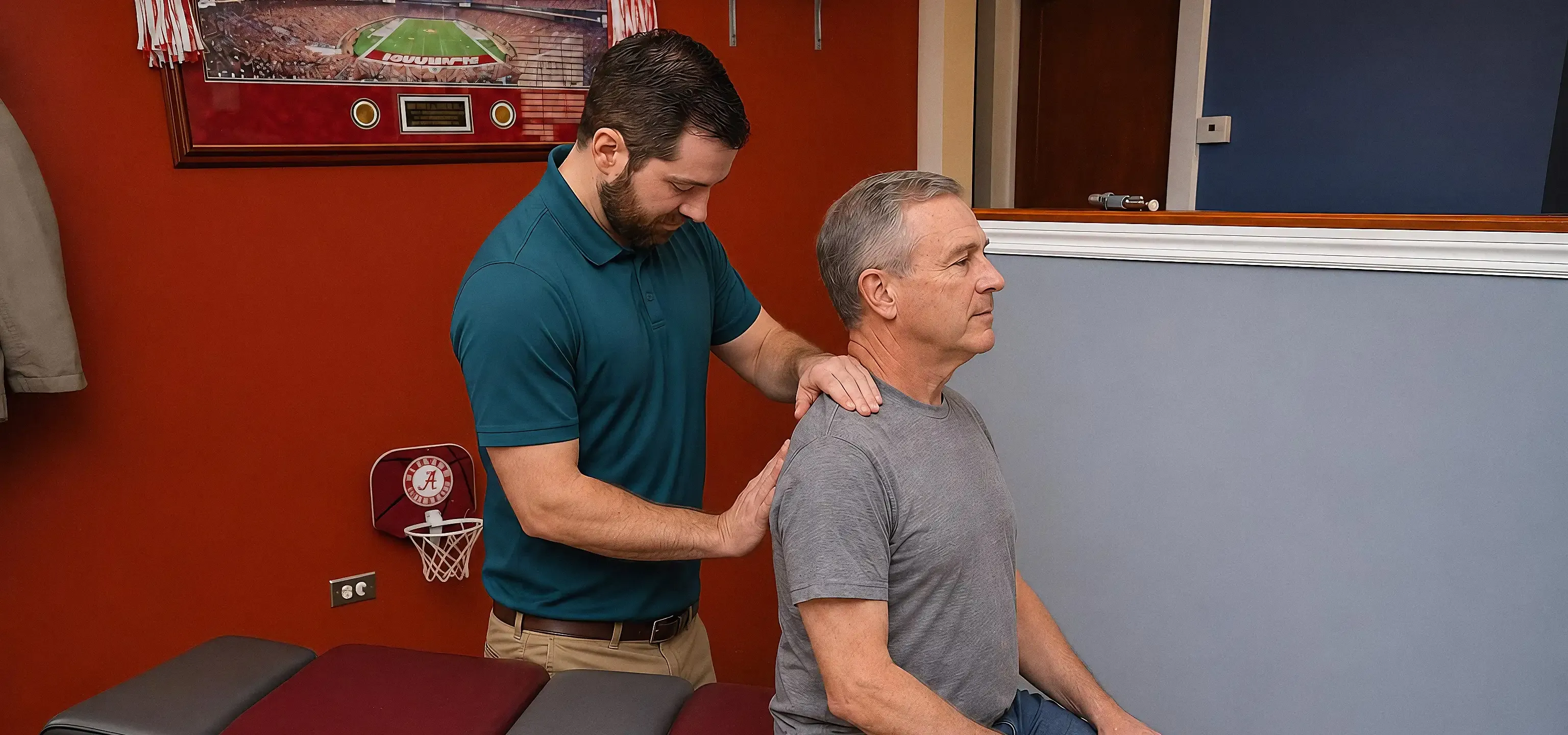

Frequently Asked Questions About Headaches and Migraines
Headaches and migraines raise many questions. Here we explain the difference between them, what a visit involves, how soon change may come and when to seek urgent care.
Can a chiropractor help with migraines?
Possibly, for some people. Studies on spinal manipulation for migraine are small and the results are mixed, so we treat chiropractic care as a complement to your medical plan, not a replacement. Research is more encouraging for tension headaches and for cervicogenic headaches that start in the neck. Individual results vary.
What is the difference between tension headaches and migraines?
Tension headaches usually feel like steady pressure on both sides of the head and rarely cause nausea. Migraines often throb on one side, can last hours to days, and may come with nausea, light sensitivity or an aura. Many people have both types, which is why a careful history matters at your first visit.
What does headache treatment at a chiropractic office involve?
Headache treatment at our office usually combines gentle adjustments or mobilization of the neck, soft tissue care, therapy modalities when helpful, and simple posture and stretching guidance. Your plan depends on your headache type, health history and comfort, and we recheck your progress at regular visits.
Where can I find migraine treatment near me in Trussville, AL?
Discover Chiropractic is at 6381 S Chalkville Road, Trussville, AL 35173, a short drive from Clay, Pinson and Argo. Call (205) 661-6600 or complete our New Patient Forms to request your first visit, and our office will help you find a time.
How soon might I notice a change?
It varies. Some people with tension or neck-related headaches notice changes within a few visits, while others need several weeks of care and home exercises. Migraine patterns take longer to judge, so a headache diary helps. If you are not improving as expected, we will talk with you about other options.
When is a headache an emergency?
Call 911 for a sudden, severe headache that feels like the worst of your life, a headache with fever and a stiff neck, confusion, weakness, numbness, slurred speech or vision loss, or a headache after a head injury. These signs need emergency medical care before any chiropractic visit.
Scientific References
- Bryans et al., J Manipulative Physiol Ther. (2011). Evidence-based guidelines for the chiropractic treatment of adults with headache. PMID: 21640251.
- Bini et al., Chiropr Man Therap. (2022). The effectiveness of manual and exercise therapy on headache intensity and frequency among patients with cervicogenic headache: a systematic review and meta-analysis. PMID: 36419164.
- Cumplido-Trasmonte et al., Neurologia (Engl Ed). (2021). Manual therapy in adults with tension-type headache: A systematic review. PMID: 34537167.
- Rist et al., Headache. (2019). The Impact of Spinal Manipulation on Migraine Pain and Disability: A Systematic Review and Meta-Analysis. PMID: 30973196.
- Chaibi et al., J Headache Pain. (2011). Manual therapies for migraine: a systematic review. PMID: 21298314.
- Hours
- Mon–Fri 7:00 AM–5:30 PM
Sat 8:00 AM–12:00 PM (2nd & 4th Saturdays only) - Phone
- (205) 661-6600