




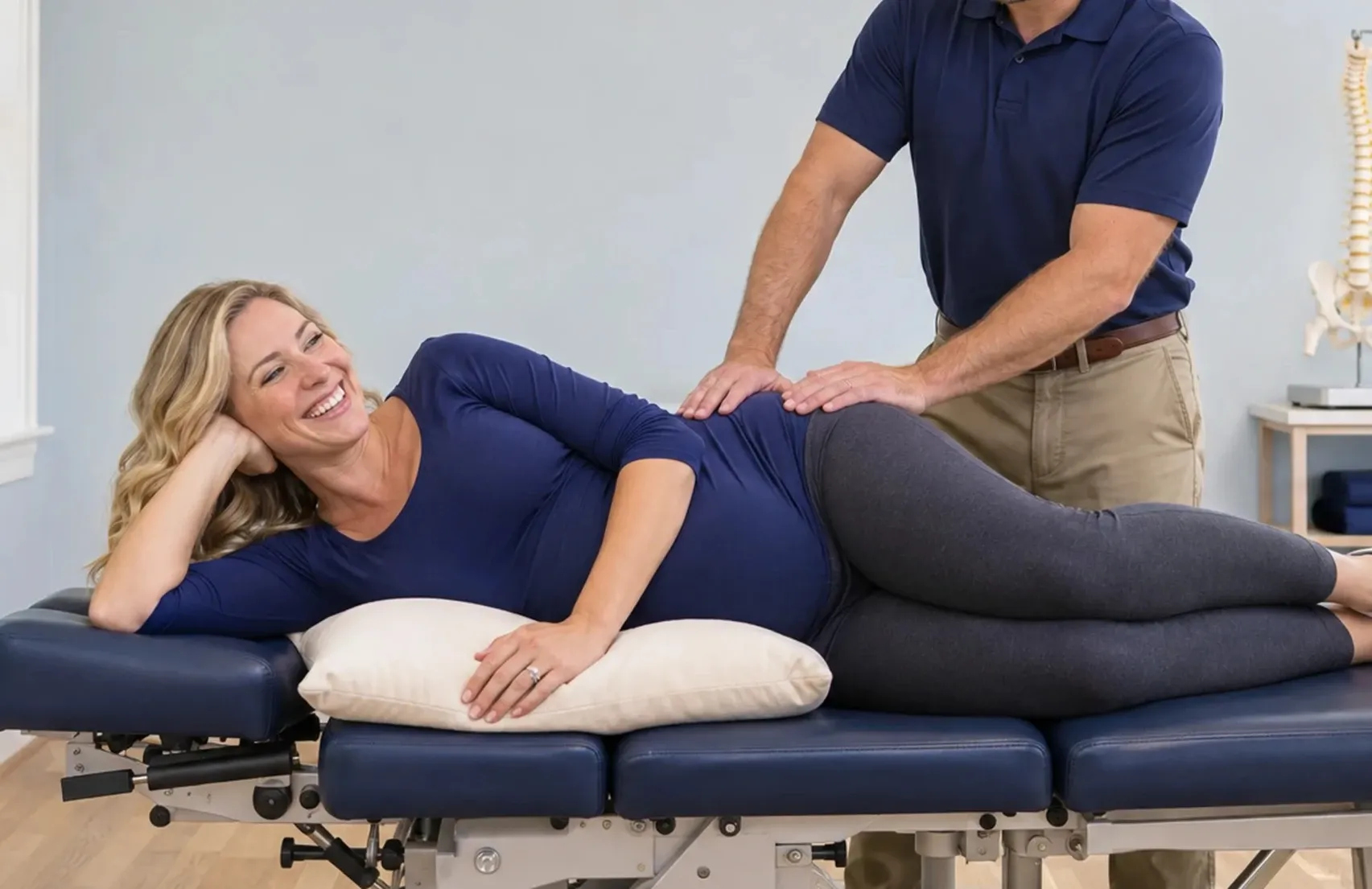

What Is Pregnancy Pelvic Pain?
Pregnancy pelvic pain, often called pelvic girdle pain, is aching or sharp discomfort around the joints of the pelvis: the pubic bone at the front and the two sacroiliac (SI) joints at the back. European guidelines estimate that about 1 in 5 pregnant women experience it, and it often appears alongside pregnancy back pain.
You might notice it when you roll over in bed, climb stairs, get out of the car or stand on one leg to pull on your pants. Some women feel a deep ache over one buttock, while others feel a click or soreness at the front of the pelvis. For many moms, it makes ordinary days feel much longer.
Recognizing the Signs
At Discover Chiropractic in Trussville, our chiropractors offer gentle prenatal care with positioning and support adapted for each trimester. You can read a pelvic girdle pain overview from Cleveland Clinic to learn more.

Why Pelvic Pain Happens in Pregnancy
Understanding the Root Causes
During pregnancy, the hormone relaxin helps loosen the ligaments of your pelvis to prepare for birth. That added give is useful at delivery, but in the months before it can leave the SI joints and the pubic joint moving less evenly. This is why SI joint pain in pregnancy is so common as the joints shift and settle.
At the same time, your growing baby moves your center of gravity forward, your lower back curve deepens and your hip muscles work harder to keep you steady. These changes add load to a pelvis that is already more flexible. It is also why many expectant mothers look for a chiropractor for pelvic pain in pregnancy.
What Makes Pregnancy Pelvic Pain Worse?
Identifying Your Triggers
Several everyday factors can make pelvic and SI joint discomfort flare during pregnancy.
-
Uneven Loading
Standing on one leg, carrying a toddler on one hip or crossing your legs puts more stress on one side of the pelvis.
-
Wide Leg Movements
Getting in and out of the car or bed with your knees apart can strain the pubic joint at the front.
-
Long Periods Still
Sitting or standing for a long time without changing position often leaves the pelvis stiff and sore.
-
Earlier Back Pain
Women who had back or pelvic pain before or during an earlier pregnancy are more likely to notice it again.
-
Busy Days on Your Feet
Long walks, shopping trips or chores with lots of bending add load as your baby grows.
-
Pregnancy Hormones
Relaxin and other hormones loosen the pelvic ligaments to prepare for birth, which can let the joints move more than usual.
How We Evaluate and When to Call Your OB
Gentle Care, With Your OB in the Loop
Your first visit starts with your pregnancy history, what your OB or midwife has shared and where you feel discomfort. Our chiropractors check your posture, hips, SI joints and lower back, then explain what they find. Care uses gentle techniques with positioning and support adapted for each trimester. See how we work as a prenatal chiropractor in Trussville, AL.
Research on chiropractic and manual therapy for pregnancy-related back and pelvic pain is still limited. Reviews describe low-quality evidence that exercise and manual therapy may help some women feel more comfortable and move more easily, and they call for better studies. We share that honestly and keep expectations realistic.
Call your OB or midwife right away, or seek emergency care, for vaginal bleeding, contractions before 37 weeks, leaking fluid, decreased fetal movement, or severe or one-sided pain with a fever. These signs need medical attention before any chiropractic visit.
Why Choose Discover Chiropractic
We have cared for Trussville families since 1999. For pelvic pain in pregnancy, we listen, explain each step and shape your care around your trimester, your comfort and your OB's guidance.
-
Trimester-Aware Care
Positioning and support are adapted for each trimester, with light, controlled pressure and no pressure on your belly, so you can rest comfortably on the table.
-
Time to Listen
We take time to hear how pelvic pain affects walking, sleep and daily tasks, and we explain each step before any care begins so you always feel at ease.
-
Practical Home Tips
We share simple ways to sleep, sit and move that may ease the strain on your pelvis day to day, including ideas for SI joint pain between your visits.
-
Respect for Your Care Team
We encourage you to keep your OB or midwife informed, and we follow their guidance about your pregnancy so your prenatal care stays connected.
How Prenatal Visits Fit Your Care
Each approach is part of prenatal chiropractic care and is chosen with your comfort in mind. Individual results vary.
| Service | Approach | Focus | Visit Rhythm | Works Alongside |
|---|---|---|---|---|
| Prenatal Chiropractic | Gentle prenatal adjustments | SI joint and pelvic comfort | As advised | Your OB or midwife |
| Prenatal Chiropractic | Webster technique | Pelvic and sacral balance | Based on your plan | Your prenatal checkups |
| Prenatal Chiropractic | Movement and home tips | Daily comfort and sleep | Reviewed each visit | Advice from your provider |

Signs It May Be Time to Book a Prenatal Visit
Recognizing When to Seek Help
A gentle prenatal visit may help if your pregnancy is otherwise healthy and these signs sound familiar.
- Pain Rolling Over
- One-Sided Buttock Ache
- Stairs Feel Harder
- Pregnancy Back Pain
Related Services
Learn about the gentle prenatal chiropractic care we offer moms, then explore the full list of services we provide.
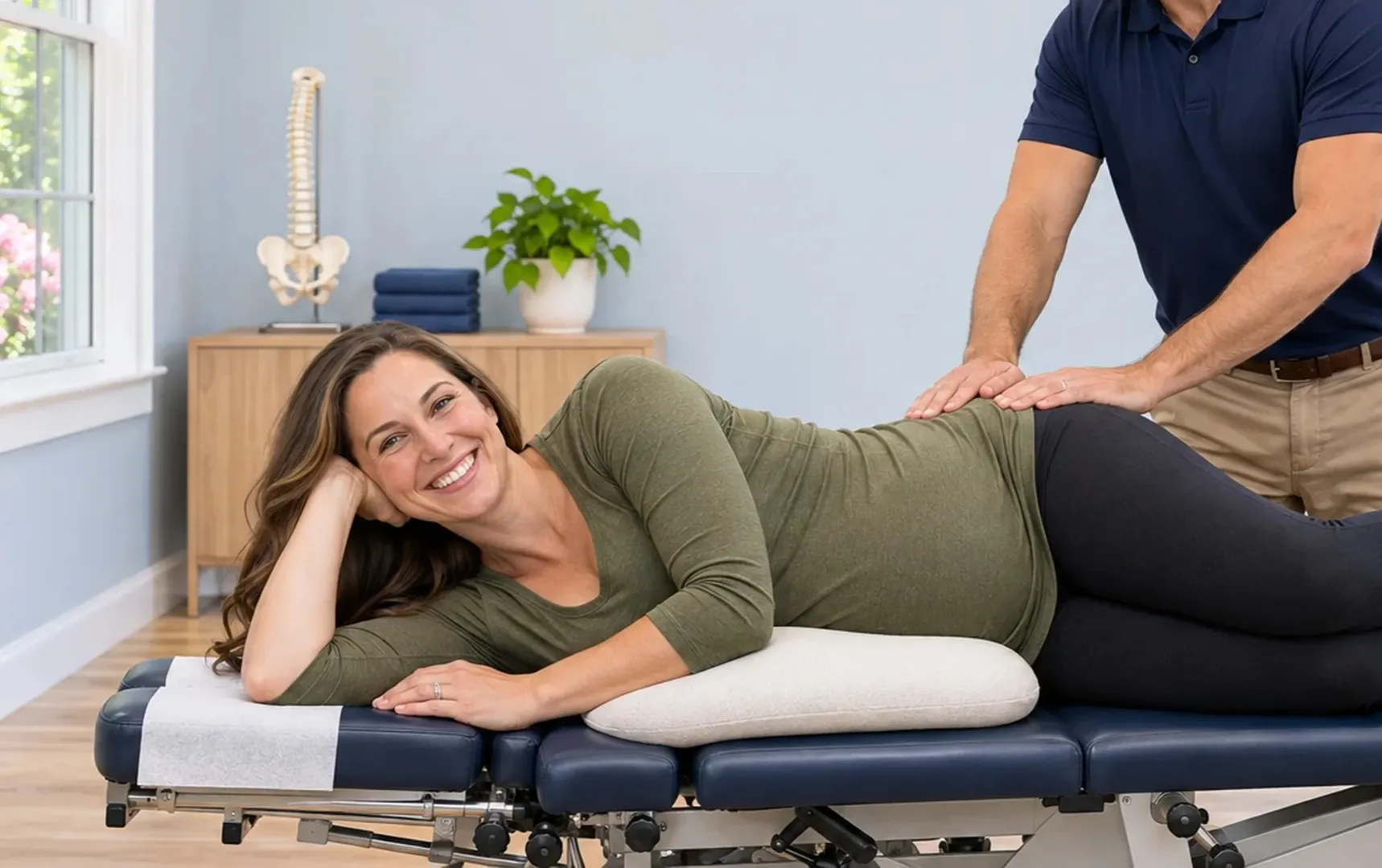
Frequently Asked Questions About Pregnancy Pelvic Pain
Pelvic pain is common in pregnancy, but it still raises questions. Here we cover safety, home care for SI joint pain, your first prenatal visit and care after your baby arrives.
Is pelvic pain normal during pregnancy?
Pelvic girdle pain is common during pregnancy, but it is still worth mentioning to your OB or midwife. Mild aching that changes with movement is typical. Severe pain, pain with a fever, bleeding, leaking fluid or contractions needs medical attention right away rather than a chiropractic visit.
Is chiropractic care safe for pregnancy back pain?
Gentle chiropractic care is commonly used for pregnancy back pain when your OB or midwife has no concerns. Our chiropractors adapt positioning for each trimester and avoid pressure on your belly. Mild soreness can happen after a visit. Please tell us about any complications so we can adjust your care.
What can I do at home for SI joint pain?
Simple habits may make SI joint pain easier to live with. Sleep on your side with a pillow between your knees, keep your knees together as you get in and out of the car or bed, sit down to dress, and take smaller steps. Ask your OB or midwife before starting any new exercise.
How many prenatal visits will I need?
The number of visits depends on how you feel, how far along you are and what our chiropractors find at your first visit. Some women come in weekly for a few weeks, then less often. We review your plan together and adjust it as your pregnancy changes. Individual results vary.
What happens at my first prenatal visit?
Your first prenatal visit starts with your pregnancy history, what your OB or midwife has shared and where you feel discomfort. Our chiropractors then check your posture, hips, SI joints and lower back with positioning and support adapted for your trimester. They explain what they find and what a care plan could look like, and nothing begins until you understand and agree.
Can pelvic pain continue after my baby is born?
For many women, pelvic girdle pain eases in the weeks after birth, but some notice it for longer. Mention lingering pain at your postpartum checkup. Our team is also glad to see you after delivery once your OB or midwife says you are ready.
Does insurance cover prenatal chiropractic care?
Coverage depends on your plan, so please call our office at (205) 661-6600 to verify your benefits before your first visit. Our team can also talk with you about payment options, including CareCredit, so cost questions are settled early and you can focus on your comfort.
Scientific References
- Liddle et al., Cochrane Database Syst Rev. (2015). Interventions for preventing and treating low-back and pelvic pain during pregnancy. PMID: 26422811.
- Weis et al., J Manipulative Physiol Ther. (2020). Chiropractic Care for Adults With Pregnancy-Related Low Back, Pelvic Girdle Pain, or Combination Pain: A Systematic Review. PMID: 32900544.
- Conner et al., Clin Obstet Gynecol. (2021). Chiropractic Care for the Pregnant Body. PMID: 33882524.
- Gutke et al., Acta Obstet Gynecol Scand. (2015). Treatments for pregnancy-related lumbopelvic pain: a systematic review of physiotherapy modalities. PMID: 26018758.
- Vleeming et al., Eur Spine J. (2008). European guidelines for the diagnosis and treatment of pelvic girdle pain. PMID: 18259783.
- Hours
- Mon–Fri 7:00 AM–5:30 PM
Sat 8:00 AM–12:00 PM (2nd & 4th Saturdays only) - Phone
- (205) 661-6600