






What Is a Pinched Nerve?
A pinched nerve happens when a disc, bone spur, swollen joint or tight tissue presses on a nerve root as it leaves the spine. Doctors call it radiculopathy. The good news is that many cases improve with time and conservative care, and that the right plan depends on where the nerve is pinched.
A pinched nerve in the neck, called cervical radiculopathy, can send sharp or burning pain into the shoulder blade, arm and hand. A pinched nerve in the back, called lumbar radiculopathy, can travel into the buttock, leg and foot, which many people know as sciatica. Tingling, numbness and weak grip or a weak foot often come with the pain.
Recognizing the Signs
At Discover Chiropractic in Trussville, AL, our pinched nerve treatment starts with a careful exam to find the level of the spine involved and to rule out problems that need a medical doctor. From there, our chiropractors build a gentle, non-surgical plan around your symptoms, your work and the activities you want to get back to.

Why Pinched Nerves Happen
Understanding the Root Causes
Each nerve root exits the spine through a small opening between two vertebrae. Discs between the bones act as cushions, and with age they lose water and height. That narrowing, along with bone spurs from arthritis, can crowd the opening. A disc bulge or herniation can also push directly on the nerve and irritate it chemically.
Once a nerve root is compressed or inflamed, it sends pain, tingling or numbness along its path. That is why a problem at the base of the neck can show up as numb fingers, and a problem in the low back can show up as calf or foot symptoms. Muscles served by that nerve may tire easily or feel weak.
Posture, repetitive lifting and long hours sitting add strain to the same spinal levels day after day. Joint stiffness above or below a painful level can shift more load onto it. The pinched nerve overview from Cleveland Clinic explains common causes and symptoms in plain language.
What Raises the Risk of a Pinched Nerve?
Identifying Your Triggers
Several factors can narrow the space around a nerve root, and they often build on each other over months or years.
-
Disc Changes
Bulging or herniated discs, more common from the 30s on, can press on a nearby nerve root in the neck or low back.
-
Arthritis and Bone Spurs
Wear in the spinal joints can form bony edges that crowd the openings where the nerves exit the spine.
-
Repetitive Strain
Heavy lifting, twisting at work and overhead tasks load the same spinal levels again and again.
-
Posture and Sitting
Long hours slumped at a desk or behind the wheel keep pressure on the discs of the neck and low back.
-
Injury or Sudden Strain
A fall, car accident or sports collision can injure a disc or spinal joint and irritate the nerve right next to it.
-
Extra Body Weight
Added body weight increases the load on spinal discs and joints, which may raise the chance of nerve irritation.
How Our Team Approaches a Pinched Nerve
Evaluation First, Then Gentle Care
Your first visit includes a history, a neurological screen of strength, reflexes and sensation, and tests of spinal motion. Our office has on-site digital x-rays when your exam calls for them. If the findings fit a pinched nerve that is safe for conservative care, we explain your options and agree on a plan together before care begins.
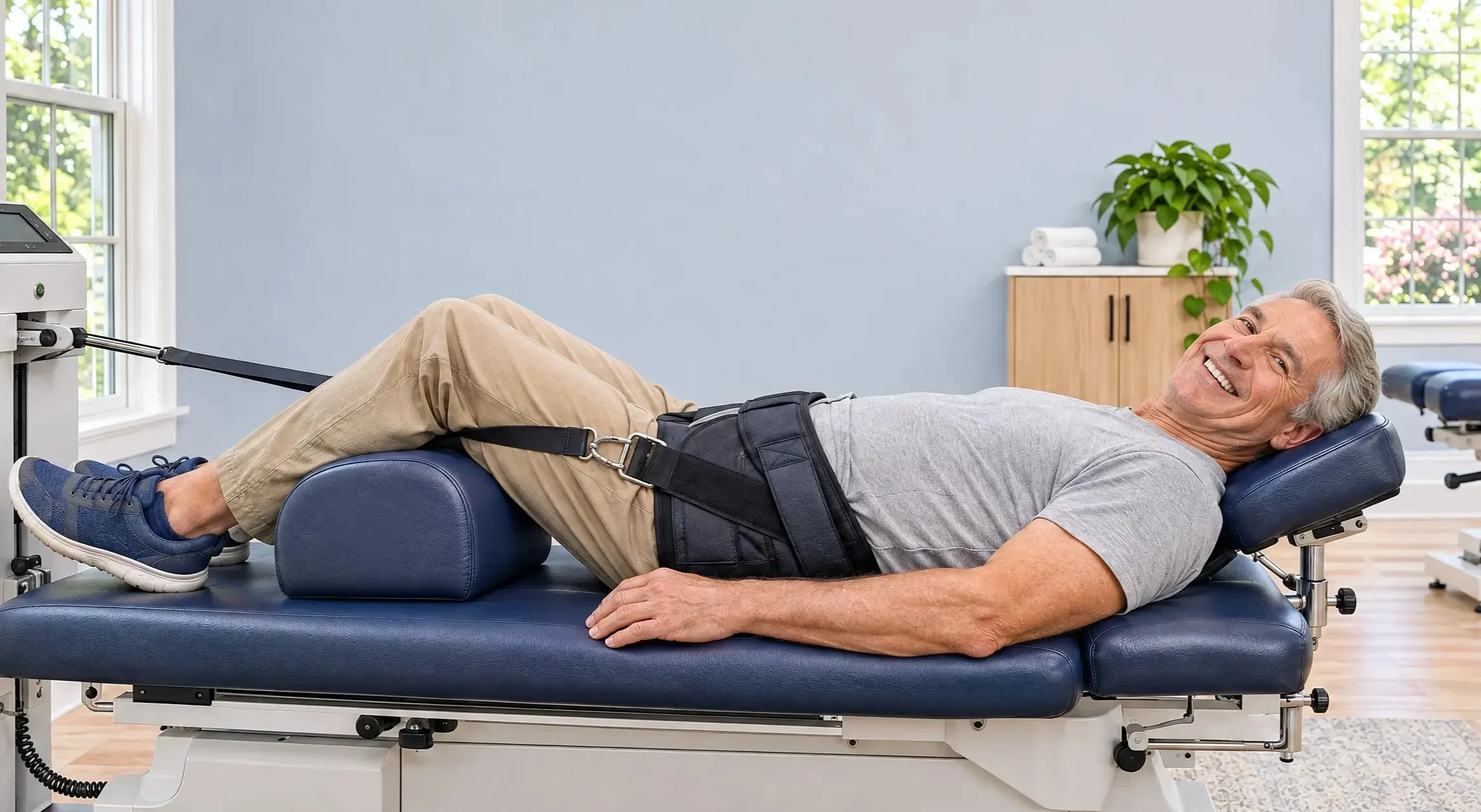
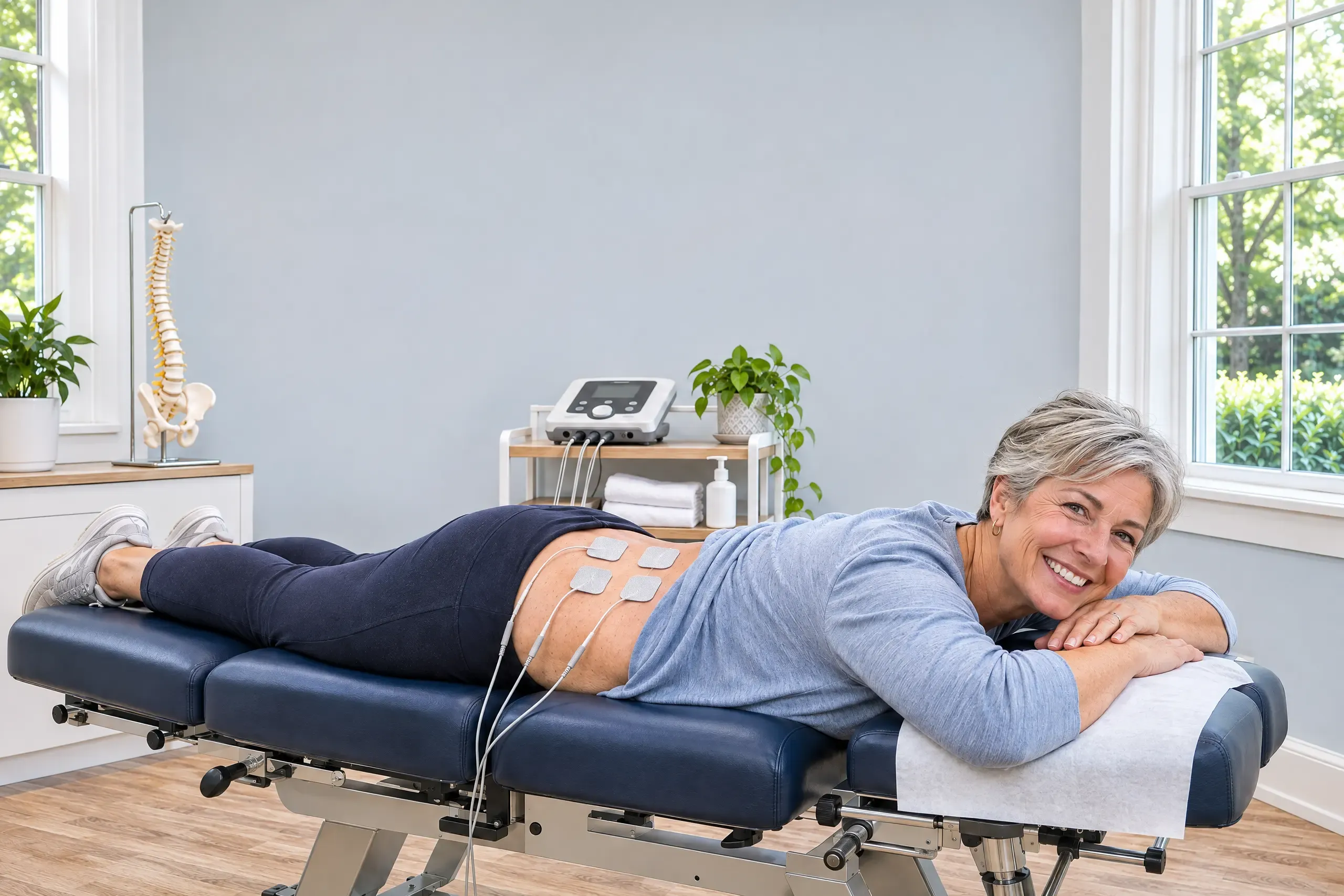
Care may combine non-surgical spinal decompression for pinched nerve, which gently stretches the spine on a motorized table, with gentle chiropractic adjustments for pinched nerve to restore motion in stiff joints. We may add ultrasound and e-stim therapy to help sore muscles feel more comfortable. Research on traction and decompression is mixed, so we track your progress and change course when you are not improving.
Leg symptoms from a pinched nerve in the back overlap with sciatica, and our guide to sciatica and chiropractic care covers that topic in more depth. See a medical doctor or call 911 for loss of bladder or bowel control, numbness in the groin, sudden or worsening weakness, fever with back or neck pain, or symptoms after a major fall or crash.
Why Choose Discover Chiropractic
Since 1999 our Trussville office has cared for nerve pain from the neck to the low back. Our two chiropractors listen, recheck nerve function as you go and offer decompression on site.
-
Nerve-Focused Exam
Strength, reflex and sensation checks guide your care at every stage and show us when a medical referral is the better step, so nothing important is missed.
-
Non-Surgical Options
Cervical or lumbar decompression, gentle adjustments and therapy modalities can be combined to fit your needs, depending on where the nerve is irritated.
-
Gentle Techniques
Our chiropractors use Diversified Technique, the Activator Method and Thompson Drop-Table, choosing the gentlest approach when a nerve is already sore.
-
Clear Plans
No care begins until you understand our findings and agree with the plan, and we adjust it as your numbness, tingling or pain changes over time.
Treatment Options Comparison
Our team often combines these options, based on where the nerve is pinched.
| Treatment | Best For | How It Feels | Typical Rhythm | Research |
|---|---|---|---|---|
| Spinal Decompression | Disc-related nerve pressure | Slow, gentle stretch | Set after your exam | Mixed |
| Chiropractic Adjustments | Stiff, restricted joints | Gentle pressure or tap | Set after your exam | Modest, mixed |
| Physical Therapy Modalities | Sore, guarded muscles | Warmth or light tingling | Paired with visits | Limited, mixed |

Signs It May Be Time to Book a Visit
Recognizing When to Seek Help
These signs often point to an irritated nerve root and are worth a careful exam, especially when they last more than a few days.
- Pain That Travels
- Pins and Needles
- Numb Patches
- Weak Grip or Foot
- Worse When Sitting
Related Services
See the decompression, chiropractic care and therapies our team may use for nerve pain, then view all services.
Frequently Asked Questions About Pinched Nerves
A pinched nerve can make simple tasks hard. Here we answer how long healing may take, what care involves for the neck or back, and when a medical doctor is the better choice.
How long does a pinched nerve take to get better?
Many pinched nerves improve over several weeks to a few months with time and conservative care. Some people notice changes within a few visits, while others need longer, especially when a disc or arthritis is involved. We review your progress at each visit and tell you if you need imaging or a medical opinion. Individual results vary.
What does pinched nerve treatment at your office involve?
Pinched nerve treatment at our office starts with an exam of your spine and nerve function. Care may include spinal decompression on a motorized table, gentle adjustments and therapy modalities such as therapeutic ultrasound or interferential current, plus posture and movement advice. The mix depends on the level of the spine involved.
Can you help a pinched nerve in the neck?
Yes, a pinched nerve in the neck is one of the conditions our chiropractors see. Research on conservative care for cervical radiculopathy, including traction and manual therapy, shows modest benefits for some people, and results are mixed. We use cervical decompression and gentle adjustments when your exam supports them.
Can you help a pinched nerve in the back?
A pinched nerve in the back, often felt as leg pain or sciatica, may respond to lumbar decompression, gentle adjustments and therapy modalities. Studies on spinal manipulation and traction for lumbar radiculopathy show mixed results, so we set clear goals, check them at each visit and refer you if your symptoms are not improving.
When should I see a medical doctor instead?
See a medical doctor or call 911 if you lose bladder or bowel control, have numbness in the groin, notice sudden or worsening weakness, or have a fever with spine pain. The same applies after a major fall or crash, or if you have a history of cancer. These signs need urgent medical evaluation before any chiropractic care.
Is spinal decompression safe for a pinched nerve?
Spinal decompression is a gentle, non-surgical therapy, and many people find it comfortable. It is not right for everyone. People with fractures, advanced osteoporosis, spinal tumors, recent spine surgery or pregnancy are usually not candidates. Tell us about your health history so we can choose a safe plan, and call (205) 661-6600 with questions.
Where can I find pinched nerve treatment near me in Trussville, AL?
Discover Chiropractic is at 6381 S Chalkville Road in Trussville, AL 35173, close to Clay, Argo and Springville. To request your first visit, complete our New Patient Forms online or call (205) 661-6600. Our team will check your nerve function and explain your non-surgical options before any care begins.
Scientific References
- Thoomes et al., Clin J Pain. (2013). The effectiveness of conservative treatment for patients with cervical radiculopathy: a systematic review. PMID: 23446070.
- Childress et al., Am Fam Physician. (2016). Nonoperative Management of Cervical Radiculopathy. PMID: 27175952.
- Romeo et al., Phys Ther. (2018). Cervical Radiculopathy: Effectiveness of Adding Traction to Physical Therapy-A Systematic Review and Meta-Analysis of Randomized Controlled Trials. PMID: 29315428.
- Berry et al., Cureus. (2019). A Review of Lumbar Radiculopathy, Diagnosis, and Treatment. PMID: 31788391.
- Vanti et al., Phys Ther. (2021). Effectiveness of Mechanical Traction for Lumbar Radiculopathy: A Systematic Review and Meta-Analysis. PMID: 33382419.
- Hours
- Mon–Fri 7:00 AM–5:30 PM
Sat 8:00 AM–12:00 PM (2nd & 4th Saturdays only) - Phone
- (205) 661-6600