






What Is Diastasis Recti?
Diastasis recti is a widening of the space between the two sides of the rectus abdominis, the long muscles down the front of your belly. During pregnancy, the connective tissue along the midline stretches to make room for your baby. For many moms, the gap narrows in the months after birth. For others, a soft bulge and a weaker core linger.
Recognizing the Signs
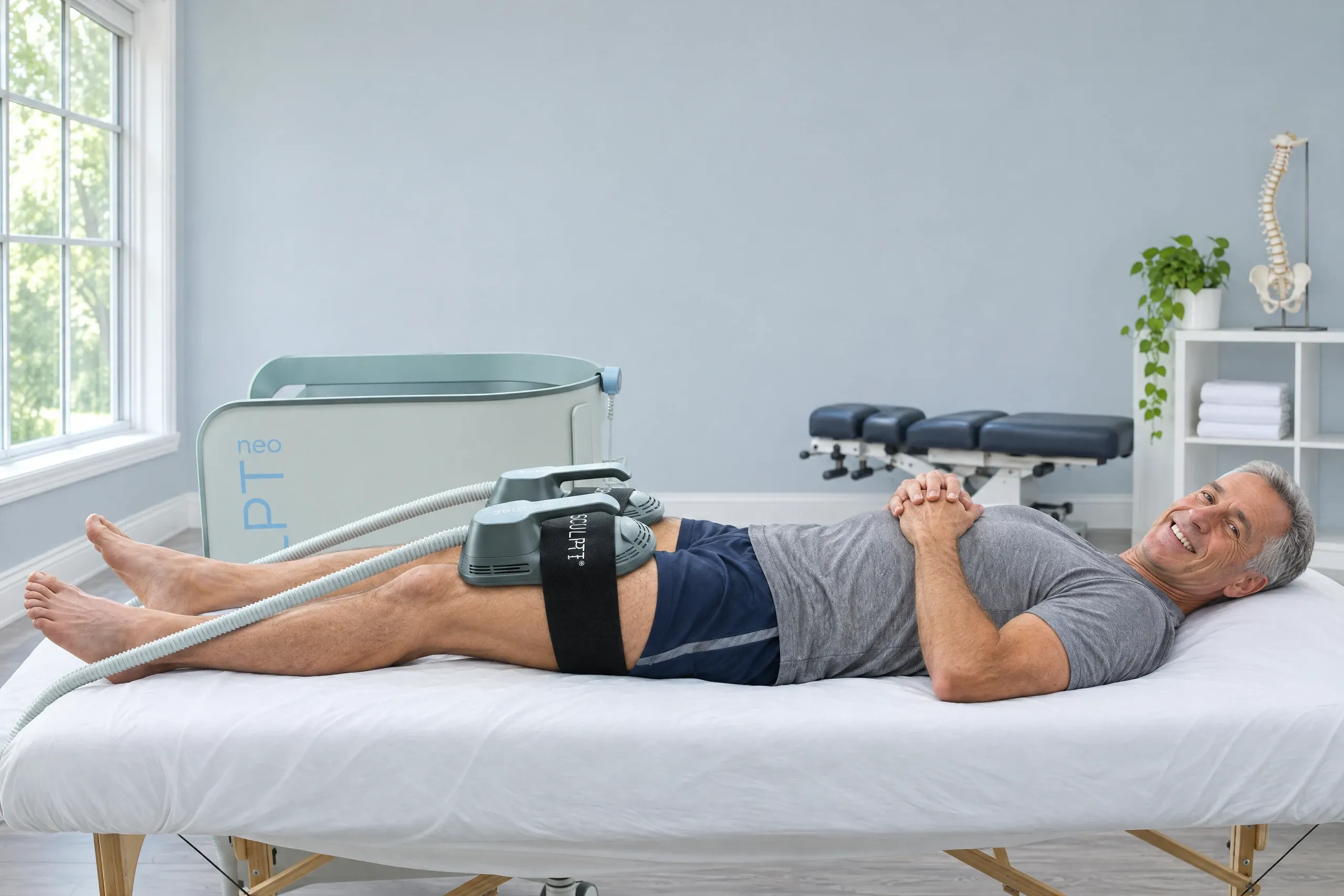
At Discover Chiropractic in Trussville, AL, our diastasis recti treatment focuses on rebuilding abdominal strength with the FDA-cleared Emsculpt Neo device. Our trained team offers Emsculpt Neo Functional core strengthening for core function and Emsculpt Neo abdominal toning for a firmer look. Neither is cleared to treat diastasis recti itself, so we keep expectations honest and work alongside your OB or physician.

Why Diastasis Recti Happens
Understanding the Root Causes
The two sides of the rectus abdominis are joined by a band of connective tissue called the linea alba. As your baby grows, hormones soften this tissue and your belly stretches it. In one study of first-time mothers, a separation was found in about 60 percent of women six weeks after birth and in about one third at 12 months.
When the linea alba stays wide and thin, the deep core muscles have a harder time supporting your trunk. You may notice a ridge or dome down the middle of your belly when you sit up, or feel that your core is weak when you lift your baby or a car seat. Some women also notice pelvic floor changes, such as leaking when they cough.
Diastasis recti is not limited to moms. A recent review notes it in women after menopause and in men, often linked to extra abdominal weight and aging. Whatever the cause, it is worth having a medical professional confirm what you are feeling before you start a plan.
What Raises the Risk of Diastasis Recti?
Identifying Your Triggers
Several factors can stretch the midline further or make it slower to recover after pregnancy.
-
Pregnancy Changes
Hormones soften connective tissue and a growing baby stretches the abdominal wall, especially late in pregnancy.
-
Multiple Pregnancies
Several pregnancies, especially close together, give the midline less time to recover between babies.
-
Twins or a Larger Baby
Carrying twins or a larger baby places more stretch on the linea alba than a single, smaller baby.
-
Heavy Lifting
Frequent heavy lifting with poor bracing raises pressure inside the abdomen and strains the midline.
-
Extra Abdominal Weight
Weight carried around the middle adds steady pressure on the abdominal wall in women and men.
-
Chronic Straining
Regular straining from constipation or a lingering cough raises pressure inside the abdomen and pushes on the midline.
Your OB First, Then Our Team
When a Medical Doctor Comes First
Check with your OB or physician before starting any device-based care after pregnancy. Most moms wait at least until their postpartum checkup, and longer after a C-section until the incision has fully healed. Emsculpt Neo is not used during pregnancy, and you should talk with your OB about timing if you are breastfeeding.
See a doctor promptly if you notice a bulge near your belly button or along the midline that is painful, firm, or does not flatten when you lie down, or if a bulge comes with nausea or vomiting. These can be signs of a hernia, which needs a medical evaluation and sometimes surgery. Emsculpt Neo does not close a separation or replace surgery when surgery is needed.
At your wellness consultation, our trained team asks about your pregnancies, deliveries, activity and goals, and screens for reasons a device is not a fit, such as a pacemaker or metal or electronic implants near the treatment area. For background reading, see this diastasis recti overview from Cleveland Clinic.
Why Choose Discover Chiropractic
We have cared for Trussville moms since 1999, from pregnancy through the busy years after. Our team listens, explains what the research does and does not show, and plans around your life.
-
Family-Focused Care
We care for moms before and after pregnancy, so we understand the season of life you are in and build a core plan that fits naps, school runs and little ones at home.
-
Honest Expectations
We explain what Emsculpt Neo is cleared for and what it is not. We never promise it will close the gap, and we help you set realistic goals for your core strength.
-
Core and Pelvic Floor
When both need support, we can address abdominal strength and pelvic floor strength together, since many moms notice changes in both areas after having a baby.
-
Works With Your OB
We ask that your OB or physician clear you first, and we support the plan you already have, including the core exercises your provider recommends for you.
Core and Pelvic Floor Options
Each option uses FDA-cleared BTL technology and focuses on a different part of your core.
| Treatment | Focus | Best For | Session Time | Typical Course |
|---|---|---|---|---|
| Emsculpt Neo Functional | Core strength and stability | Moms rebuilding core function | About 30 minutes | About 4 sessions |
| Emsculpt Neo | Abdominal toning and contour | A softer midsection | About 30 minutes | About 4 sessions |
| Emsella Pelvic Floor Therapy | Pelvic floor strength | Leaking after childbirth | About 30 minutes | About 6 sessions |

Signs It May Be Time to Book a Visit
Recognizing When to Seek Help
If these sound familiar and your OB or physician has cleared you for activity, a conversation with our team can help you explore your options.
- A Midline Bulge
- A Gap You Can Feel
- Still Looking Pregnant
- A Weak Core
- Pelvic Floor Changes
Related Services
Read about the wellness services that may support your core and pelvic floor, then explore everything we offer.
Frequently Asked Questions About Diastasis Recti
If you are healing after pregnancy, you likely have questions. Here we cover FDA clearance, when to start, core exercises and when surgery may be the better option.
Where can I find diastasis recti treatment near me in Trussville, AL?
Discover Chiropractic offers Emsculpt Neo and Emsella at 6381 S Chalkville Road in Trussville, AL, close to Birmingham, Center Point, Clay and Springville. Call (205) 661-6600 or choose Book a Wellness Appointment to start with a consultation with our trained team.
Is using Emsculpt for diastasis recti FDA cleared?
Emsculpt Neo is FDA cleared to strengthen and tone the abdominal muscles, not to treat diastasis recti or close the separation. A small 2020 pilot study of 10 postpartum women found thicker abdominal muscles and a narrower separation on MRI after four HIFEM sessions, but it had no comparison group. Larger studies are needed. Individual results vary.
How soon after having a baby can I start?
Your OB or physician should clear you first. Many moms wait at least until their postpartum checkup, and longer after a C-section. The gap often narrows on its own in the first months after birth, so some women give their body time before adding device-based care. Talk with your OB about timing if you are breastfeeding.
Do I still need core exercises?
Yes. Guided core exercise, often taught by a pelvic floor physical therapist, is a common first step. A 2021 review found the evidence for any single exercise program is still very limited, so the right plan depends on you. Emsculpt Neo does not replace exercise, and many moms use both to rebuild strength.
When is surgery the better option?
A very wide separation, a hernia, or problems that continue despite exercise may need a surgeon. A recent review notes that severe diastasis recti may require surgical repair. If your OB or physician recommends a surgical consultation, Emsculpt Neo is not a substitute. It strengthens and tones muscle but does not repair connective tissue.
Scientific References
- Jacob et al., J Clin Aesthet Dermatol. (2020). Abdominal Remodeling in Postpartum Women by Using a High-intensity Focused Electromagnetic (HIFEM) Procedure: An Investigational Magnetic Resonance Imaging (MRI) Pilot Study. PMID: 33349789.
- Sperstad et al., Br J Sports Med. (2016). Diastasis recti abdominis during pregnancy and 12 months after childbirth: prevalence, risk factors and report of lumbopelvic pain. PMID: 27324871.
- Gluppe et al., Braz J Phys Ther. (2021). What is the evidence for abdominal and pelvic floor muscle training to treat diastasis recti abdominis postpartum? A systematic review with meta-analysis. PMID: 34391661.
- Du et al., Hernia. (2025). Diastasis recti abdominis: A comprehensive review. PMID: 40622579.
- Kohan et al., Aesthetic Plast Surg. (2024). High-Intensity Focused Electromagnetic (HIFEM) Energy With and Without Radiofrequency for Noninvasive Body Contouring: A Systematic Review. PMID: 37957393.
- U.S. Food and Drug Administration. (2021). 510(k) premarket notification K200382 (BTL Industries, BTL-703-2, electromagnetic stimulation with bipolar radiofrequency): improvement of abdominal tone and strengthening, toning and firming of the buttocks, thighs and calves, and strengthening of the arms. Cleared January 6, 2021.
- Hours
- Mon–Fri 7:00 AM–5:30 PM
Sat 8:00 AM–12:00 PM (2nd & 4th Saturdays only) - Phone
- (205) 661-6600